Total Pageviews

Tuesday, December 23, 2014

2014 Award for Worst Corporation goes to….

We want to give the worst corporation in the world an award. Our amazing community of over 5.5 million people has been hard at work in 2014 holding corporate power to account, taking action for human and worker rights, environmental protection, and people over profits -- and now it's time to select the worst of the worst. 

We’re excited to announce the first ever SumOfUs Corporate Evil Awards! Think of it as a People’s Choice award for corporate wrongdoing. We have a list of corporations that have done awful stuff for workers, communities, the environment and the world in 2014. Vote for the corporation you think has done the most evil for the world in 2014. And there’s a prize -- we’ll present the award to the corporation, and we’ll commit to supercharge our campaign against the winner over the next year.

Can you cast your ballot now? It’s easy: simply click the “vote” button next to your choice. Happy voting!
Chevron
Chevron won't clean up this mess.
Chevron's three decades of oil drilling in the Ecuadorian Amazon saw the oil giant dump over 18 billion gallons of toxic wastewater into pristine rainforest -- but the company refuses to pay up the $9.5 billion it owes affected communities.
Nestle
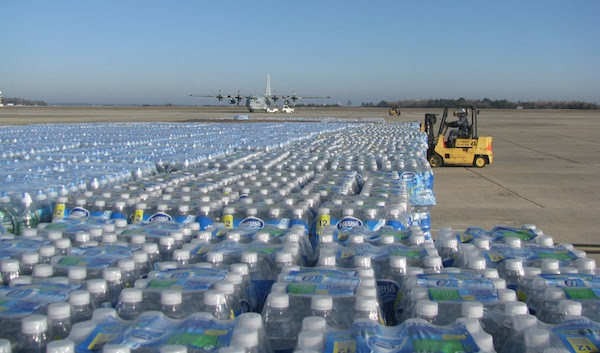
Nestlé is stealing communities' water all over the planet for profit.
Nestlé has done everything from draining drinking water in Pakistani villages to using child slavery to make chocolate. Then its CEO had the gall to claim water was not a human right. 
 
PepsiCo
PepsiCo is bulldozing their homes.
Sumatran orangutans are critically endangered because PepsiCo is bulldozing their homes to build massive palm oil plantations. Palm oil is also releasing billions of of tonnes of greenhouse gases into the atmosphere, fuelling climate change.

Bayer
Does Bayer hate bees?
The massive chemical giant is fighting laws to ban pesticides responsible for millions of global bee deaths. If Bayer doesn’t buzz off, our tiny little pollinators could die for good -- putting the global food supply in danger.  
Monsanto
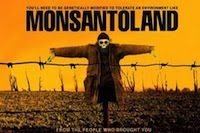
Monsanto is terrorizing farmers across the planet.
Monsanto and its allies sued Vermont for trying to stop a new law that required genetically engineered foods be labeled, and then tried to put Guatemalan farmers behind bars for saving seeds.  
 
Amazon
Amazon could kill small business everywhere.
Amazon uses a web of shell companies to avoid paying taxes, undercuts independent retailers to drive them out of business, and uses creepy monitoring technologies to track employees’ moves.
 

The SumOfUs community exists to hold corporate power to account, and we’re working together everyday to mobilize millions of people across the planet to create a more just society. Thanks for all you do to make that possible. Please cast your vote now -- we’ll announce the winner early in the new year. May the worst corporation win!

Thanks for all you do,
Paul, Emma, Angus and the rest of the SumOfUs team

SumOfUs is a worldwide movement of people like you, working together to hold corporations accountable for their actions and forge a new, sustainable path for our global economy. Please help keep SumOfUs strong by chipping in $3.

Monday, December 22, 2014

Peru Is Now Giving Free Solar Power To Its 2 Million Poorest Citizens

Posted: 22 Dec 2014 10:32 AM PST
We Are Change


Minds

The National Photovoltaic Household Electrification Program will cost about $200 million, which is basically nothing in the scheme of most international budgets. Peru also leads the way in national dedication to organic food and doesn’t allow GMO.  

The program plans to install about 12,500 photovoltaic solar systems to provide for approximately 500,000 households. The remainder will be auctioned off.

Energy and Mining Minister Jorge Merino said, “This program is aimed at the poorest people, those who lack access to electric lighting and still use oil lamps, spending their own resources to pay for fuels that harm their health.”

Currently, only about 66 percent of Peru’s population has access to electricity.

“With about 29.5 million inhabitants, Peru is the fifth most populous country in South America.[78] Its demographic growth rate declined from 2.6% to 1.6% between 1950 and 2000; population is expected to reach approximately 42 million in 2050.[79] As of 2007, 75.9% lived in urban areas and 24.1% in rural areas.[80] Major cities include Lima (home to over 8 million people), Arequipa, Trujillo, Chiclayo, Piura, Iquitos, Cusco, Chimbote, and Huancayo; all reported more than 250,000 inhabitants in the 2007 census.[81] There are 15 uncontacted Amerindian tribes in Peru.[82]”

Sources:

http://cleantechnica.com/2013/07/15/peru-solar-power-program-to-give-electricity-to-2-million-of-poorest-peruvians/

http://inhabitat.com/peru-solar-power-program-aims-to-give-electricity-to-the-countrys-2-million-poorest-citizens/

http://www.laht.com/article.asp?ArticleId=848797&CategoryId=14095

http://www.huffingtonpost.com/2013/07/23/peru-solar-power-2-million-poorest-residents_n_3640197.html

http://en.wikipedia.org/wiki/Peru

The post Peru Is Now Giving Free Solar Power To Its 2 Million Poorest Citizens appeared first on We Are Change.

Ten Key Papers that Challenge the Pro-fluoridation Mantra


1. Brunelle and Carlos. 1990. Recent Trends in DentalCaries in U.S. Children and the Effect of Water Fluoridation. Journal of Dental Research,69(Special Issue):723-727.

2. Featherstone JD. 2000.The Science and Practice of Caries Prevention. Journal of the American Dental Association (JADA), Jul; 131(7):887-99.

3. Warren JJ, et al. 2009. Considerations on optimal fluoride intake using dental fluorosis and dental caries outcomes--a longitudinal study. Journal of Public Health Dentistry, 69(2):111-15. Spring.

4. Ko L, Thiessen KM. 2014. A critique of recent economic evaluations of community water fluoridation. International Journal of Occupational and Environmental Health.

5. Luke J. 2001. Fluoride deposition in the aged human pineal gland. Caries Research 35(2):125-128. See also Luke’s PhD thesis click here.

6. Xiang Q, et al. 2003a. Effect of fluoride in drinking water on children’s intelligence. Fluoride 36(2):84-94, and Xiang Q, et al. 2003b. Blood lead of children in Wamiao-Xinhuai intelligence study [letter]. Fluoride 36(3):198-199.

7. National Resource Council of the National Academies. 2006. Fluoride in Drinking Water: A Scientific Review of EPA’s Standards.

8. Bassin EB, et al. 2006. Age-specific fluoride exposure in drinking water and osteosarcoma (United States). Cancer Causes and Control, May;17(4):421-8.

9. Choi AL, Grandjean P, et al. 2012. Developmental Fluoride Neurotoxicity: A Systematic Review and Meta-Analysis. Environmental Health Perspectives, 120(10):1362–1368.

10. Choi AL, et al. 2015. Association of lifetime exposure to fluoride and cognitive functions in Chinese children: A pilot study. Neurotoxicology and Teratology, 47:96–101.

Related:


Sunday, December 21, 2014

American Drug War Films

American Drug War: The Last White Hope: Pre Release Cut 


American Drug War 2 Film Exposes The Drug War 

"We are the only place to have this DVD in stock and ready to ship. Director Kevin Booth has exclusively selected Infowars to handle the release of this DVD. Order today and enjoy special discounted pricing. http://www.infowarsshop.com/American-...
On sale $14.95

In American Drug War 2: Cannabis Destiny (DVD, 90 minutes) director Kevin Booth navigates through the cutting edge of cannabis research while becoming a foster parent to a child who is court ordered to take powerful, mind-altering drugs."


Related: 

Get High Now (without drugs)

DMT The Spirit Molecule FULL DOCUMENTARY

Things That Make You Go "Hmmmmm"


Saturday, December 20, 2014

Aspirin: It kills 20,000 Americans every year - The Evidence Against Aspirin (Baby Aspirin Included) And For Natural Alternatives

Common over-the-counter painkillers such as aspirin kill around 20,000 Americans every year, and another 100,000 end up in hospital as a result of taking the drug, new research reveals.

Painkillers known as NSAIDs (non-steroidal, anti-inflammatory drugs) are far more dangerous than people have been told, and can cause life-threatening gastrointestinal (GI) bleeding, stomach perforations and ulcers.

More than 14 million Americans regularly take an NSAID for their arthritis pain alone, and around 60 per cent of these will suffer gastrointestinal side effects – and will probably never blame the drug, researchers from the Eastern Virginia Medical School estimate.
The Evidence Against Aspirin And For Natural Alternatives:
Taking a "baby aspirin," i.e. an 81 mg dose, is considered safer -- which it is relative to a 325 mg "adult dose" – but is known to cause widespread and significant gastroduodenal damage.  A study published in 2009 in the journal Currrent Medical Research & Opinion titled, "Gastroduodenal toxicity of low-dose acetylsalicylic acid: a comparison with non-steroidal anti-inflammatory drugs," found the following:
Data suggest that ASA causes significant gastroduodenal damage even at the low doses used for cardiovascular protection. These effects (both systemic and possibly local) may be pharmacodynamically distinct from the gastroduodenal toxicity seen with NSAIDs.[18]
Researched aspirin alternatives include:
  • Pycnogenol: A human study published in 1999 in the journal Thrombotic Research found that pycnogenol was superior (i.e. effective at a lower dosage) to aspirin at inhibiting smoking-induced clotting, without the significant (and potentially life-threatening) increase in bleeding time associated with aspirin use.[22] The abstract is well worth reading in its entirety:
The effects of a bioflavonoid mixture, Pycnogenol, were assessed on platelet function in humans. Cigarette smoking increased heart rate and blood pressure. These increases were not influenced by oral consumption of Pycnogenol or Aspirin just before smoking. However, increased platelet reactivity yielding aggregation 2 hours after smoking was prevented by 500 mg Aspirin or 100 mg Pycnogenol in 22 German heavy smokers. In a group of 16 American smokers, blood pressure increased after smoking. It was unchanged after intake of 500 mg Aspirin or 125 mg Pycnogenol. In another group of 19 American smokers, increased platelet aggregation was more significantly reduced by 200 than either 150 mg or 100 mg Pycnogenol supplementation. This study showed that a single, high dose, 200 mg Pycnogenol, remained effective for over 6 days against smoking-induced platelet aggregation. Smoking increased platelet aggregation that was prevented after administration of 500 mg Aspirin and 125 mg Pycnogenol. Thus, smoking-induced enhanced platelet aggregation was inhibited by 500 mg Aspirin as well as by a lower range of 100-125 mg Pycnogenol. Aspirin significantly (p<0.001) increased bleeding time from 167 to 236 seconds while Pycnogenol did not. These observations suggest an advantageous risk-benefit ratio for Pycnogenol." [emphasis added]
Pycnogenol also has about as many "side benefits" as aspirin has side effects. You can view them on our pycnogenol research page.
  • Policosanol: Already well-known for its ability to modulate blood cholesterol levels as effectively as statins, but without their notorious side effects, this sugar cane wax extract has been found to be as effective as aspirin at inhibiting clotting, but at a lower, safer dose.[23]
Ultimately, however, cardiovascular disease and heart attacks, for instance, are not caused by a lack of aspirin. To explore further the research related to preventing and treating heart disease naturally, visit our Health Guide: Heart Health.
"Pycnogenol is a trademarked name for pine bark extract, and there is little to no difference between the two in terms of composition or effects."

http://www.livestrong.com/article/291067-pycnogenol-vs-pine-bark-extract/
ehow.com:
Aspirin is made of the salicylate derived from the willow bark with a chemical tag called acetyl. The acetyl is combined with the salicylate to form the active ingredient in aspirin, which is acetylsalicylate.  White willow bark causes severe gastric distress. Hippocrates knew this in 400 B.C. when it was used by the ancient Greeks. Aspirin is a blood thinner and should be used with caution if you are on other medication. The main difference between aspirin and white willow bark is acetyl. In the late 1800s, scientists discovered that combining acetyl with salicylate prevented the gastric distress caused by salicylate. This allowed aspirin to become a viable and marketable product. Read more : http://www.ehow.com/facts_5939262_white-willow-bark-vs_-aspirin.html

Kroger’s Killer Chemicals

Paul Ferris, SumOfUs.org 

As many of us are getting ready for our big holiday meals, dangerous chemicals may be lurking in our favorite dishes -- and lots of other products we buy. And Kroger, the largest grocery chain in the US, is refusing to do anything about it.

Kroger is reportedly selling over 150 products with hazardous chemicals harmful to children from tableware with formaldehyde to parabens in skin care products to phthalates in children’s clothing.

Kroger lags behind competitors Target and Walmart that have comprehensive policies to screen out and eliminate toxic chemicals in their products. If they can do it, so can Kroger.

Tell Kroger: Don't put our families at risk, keep toxic chemicals out of your products.

Studies have shown toxic chemicals can migrate out of food packaging and get into the food we eat, chemicals that have been linked to birth defects in baby boys and asthma in children. One such study published this past July found 175 toxic chemicals are legally used in food production.
It’s not just toxic chemicals in food packaging. Many consumer products contain chemicals that have been linked with chronic diseases and health conditions, including cancer, reduced fertility, learning and developmental disabilities, behavioral problems, obesity, and diabetes.

Tell Kroger it’s time to ensure packaged foods and other products they sell are safe, especially for children and pregnant women.

Kroger has the power and a fundamental moral responsibility to ensure products on their store shelves are safe and free of toxic chemicals. With your help we can make sure they do.

***********
More information:

Mind the Store campaign profile page on Kroger, Safer Chemicals Healthy Family Coalition, 2014

175 chemicals with known hazardous properties legally used in food packaging, FoodProductionDaily.com, October 16th, 2014